

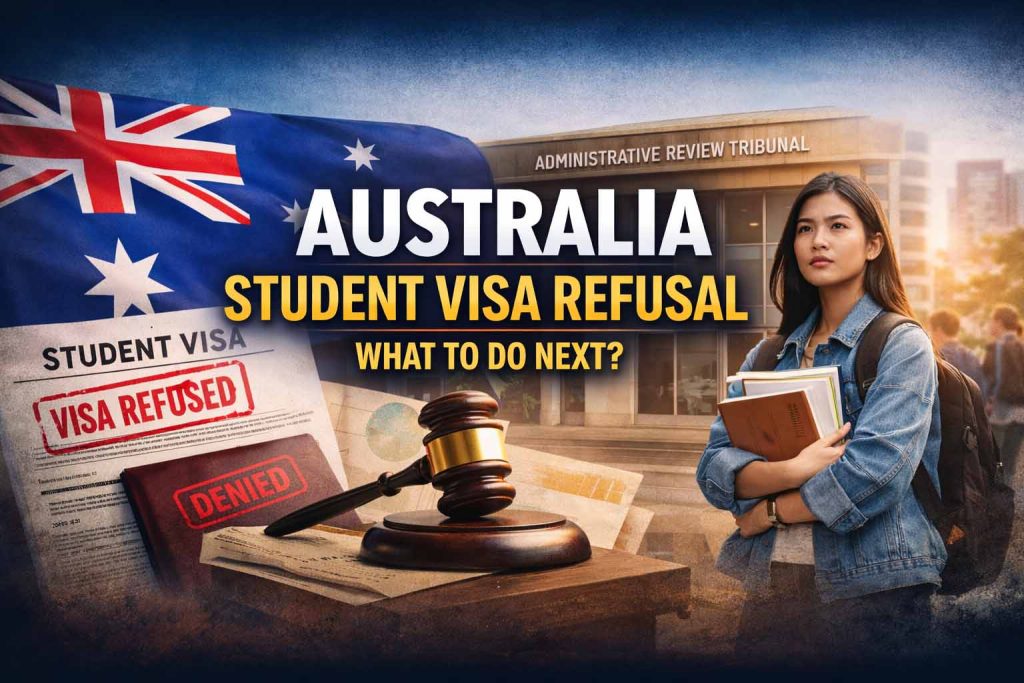
Most students think that a refusal is the end of their plan to study but as it turns out, there are still legal routes to do so. Global Consult has been assisting numerous international students following visa rejections and has been able to assist several successful review cases at the Administrative Review Tribunal. This is a comprehensive manual on how students are supposed to proceed once they have been rejected and how they can increase their chances of succeeding on the second attempt with the visa.
Global Consult has been assisting numerous international students following visa rejections and has been able to assist several successful review cases at the Administrative Review Tribunal. This is a comprehensive manual on how students are supposed to proceed once they have been rejected and how they can increase their chances of succeeding on the second attempt with the visa.
Visa Refusal
Why Student Visas Get Refused in Australia
Student visa applications are assessed by the Department of Home Affairs. The department evaluates whether applicants meet all visa requirements under Australian migration law.
Common Reasons for Student Visa Refusal
- Genuine Student Requirement Not Met
Students must demonstrate clear study intentions and career benefits from their chosen course. Learn more about Australia Student Visa requirements. - Insufficient Financial Evidence
Applicants must prove they can cover tuition fees, living expenses, and travel costs. - Weak Academic Background or Course Relevance
The course must align with previous education and future career goals. - English Language Requirement Not Met
Students must meet minimum English test scores. - Incorrect or Incomplete Documents
Missing or inconsistent information is a major refusal factor.
According to Australian immigration policy, refusal letters always outline the legal reasons for the decision and explain available review rights.
Understanding Australian Student Visa Refusal Rights
The Australian immigration policy requires that refusal letters should always give the legal reasons why the decision is made and define the review rights.
Step 1: Learn Your Visa Refusal Letter
After being denied a visa, the most significant paper is the refusal letter. It explains:
- The lawful reasons of rejection.
- Considered by immigration evidence.
- Whether rights of appeal exist.
- Time limits to appeal or to do anything.
The common error made by many students involves re-applying without proper knowledge of the reasons for rejection. We have learned at Global Consult that a correct analysis of the refusal notice is essential to organise the follow-up action. Our Student Visa Refusal Help service provides structured guidance.
Step 2: Determine Whether You Can Make an Appeal of the Visa Rejection
The student can be entitled to demand review via the Administrative Review Tribunal (ART). The tribunal is an autonomous body that examines decisions made by visa processors to ensure they are made in accordance with Australian migration law.
Important ART Appeal Facts
- Appeals normally have to be filed within 28 days.
- Supporting evidence can be provided.
- ART may confirm the refusal or return the case to be re-examined.
Global Consult helps students prepare cases related to ART by enhancing documentation, addressing refusal issues, and guiding applicants throughout the review process. Learn more about our ART Appeal Support Services.
Step 3: Consult Registered Migration Professionals
Upon being refused a visa, students are advised to consult professional services regulated by the Migration Agents Registration Authority.
Registered migration professionals are able to:
- Assess refusal reasons
- Suggest the most powerful visa strategy
- Prepare ART review applications
- Lessen chances of further rejections
Re-application without professional guidance is likely to result in more complications and poor immigration history.
Step 4: Re-evaluate Applying for a Student Visa
If students can address past refusal issues and meet visa requirements, they can apply again for a new visa.
Improving a New Student Visa Application
Well-Developed Authentic Student Statement
Students will be expected to explain:
- What made them take their decision.
- The relevance and career goals of the study.
- Reasons for selecting Australia.
Greater Financial Documentation
The applicant is required to reveal adequate funds toward:
- Tuition fees
- Living expenses
- Accommodation and transportation expenses
New Academic or English Results
Visa applications can be strengthened by offering better English scores or updated academic records.
Students must also check legal limitations before reapplying, especially if they are based in Australia.
Step 5: Learn About Bridging Visa Alternatives
If a student visa is denied while the student is in Australia, they may be eligible for a Bridging Visa. This allows students to remain lawful while awaiting appeal or visa results.
Students must comply with visa conditions such as work or study restrictions to protect future visa opportunities.
Common Errors Students Make After Visa Refusal
- Reapplying without addressing refusal reasons.
- Ignoring appeal deadlines.
- Submitting inconsistent information.
- Consulting unregistered consultants.
Avoiding these errors significantly improves the chances of future visa success.
How Global Consult Supports Students After Visa Refusal
Global Consult is an education consultancy firm focused on ethical and professional guidance for international students. Our team has helped many students manage complex refusal cases and ART reviews.
Our Services Include:
- Comprehensive visa rejection evaluation.
- ART case preparation assistance.
- Guidance on reapplying for a student visa.
- Cooperation with qualified migration professionals.
- End-to-end student visa counselling.
We are committed to helping students achieve their academic ambitions in Australia through structured and accountable support.
Common FAQs About Student Visa Refusal
Is It Possible to Reapply Once a Visa is Denied?
Yes, students may reapply if they properly address refusal reasons and satisfy visa requirements.
How Long Do I Have To Appeal?
Appeal deadlines are generally within 28 days, depending on individual circumstances.
Does a Visa Refusal Affect Future Applications?
Yes, but a strong new application that clearly addresses previous concerns can still succeed.
The refusal of a student visa can be disappointing, but it does not automatically end your journey in Australian education. Many students successfully secure visas after improving documentation, lodging appeals, or submitting stronger applications.
If your visa has been refused, book a consultation with Global Consult today and take the next step with professional guidance.